
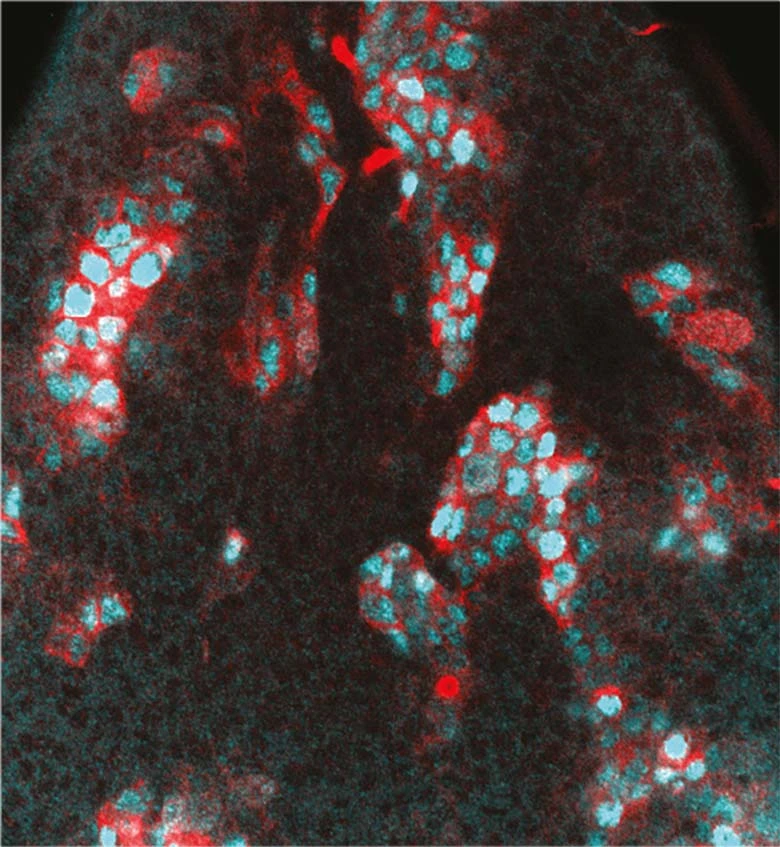
Taking advantage of the genetic opportunities offered by a Drosophila brain tumour model, the Maurange team systematically investigated how the inactivation of epigenetic factors, often mutated in paediatric cancers, affects the cellular hierarchy and growth of tumours. Combined with single-cell RNA-seq approaches, they showed that inactivation of two chromatin complexes, known to have an antagonistic function during development (polycomb/PRC2 and trithorax/MLL1/2), can cooperate to induce plasticity in the cellular hierarchy and heterogeneity in the pool of cancer stem cells. This study paves the way to a better understanding of the role of epigenetic factors in cancer progression and resistance to treatments.
Keynote Seminar: Ardem Patapoutian | June 3, 2026
Discover how PIEZO ion channels act as essential pressure sensors for touch, pain, and beyond — June 3, 2026, at 11:30 in Amphi 12.